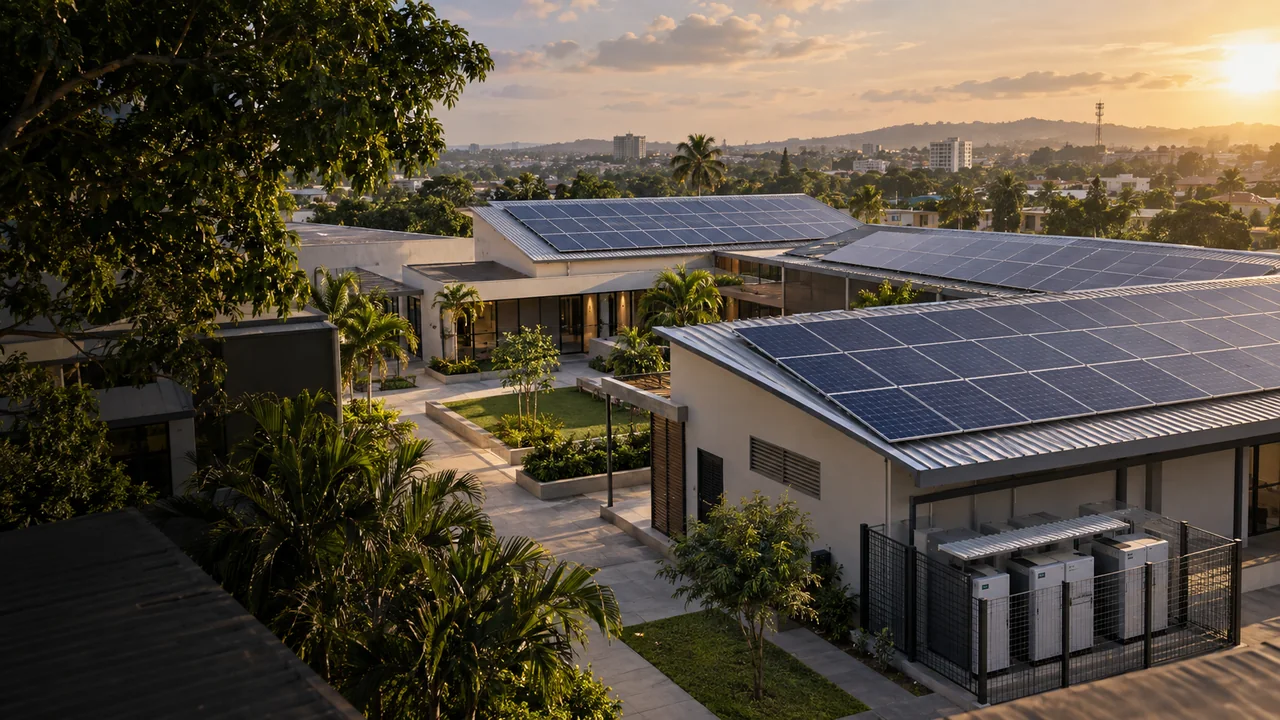
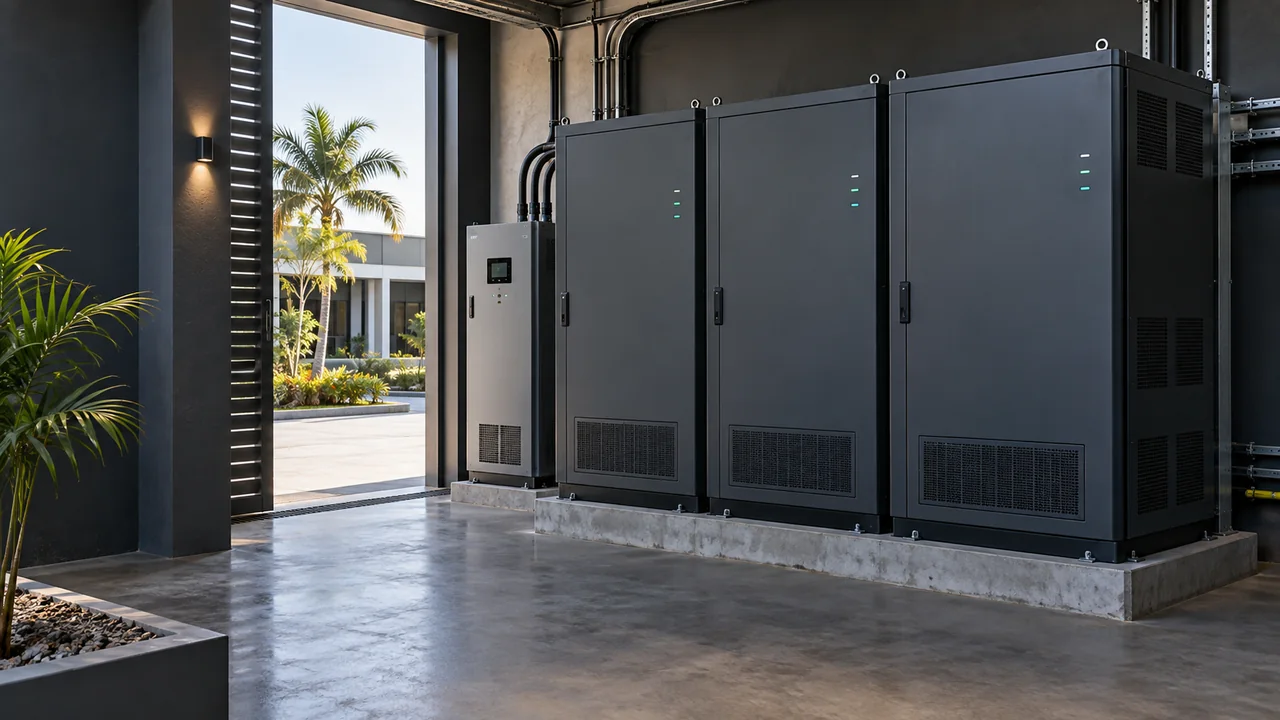
Homes and estates
Share electricity use, available space and the loads that matter most.
Bring renewable generation, battery storage and demand into balance. Develop a practical route towards lower-carbon power and greater energy resilience for your site.
Your project, in context
Explore practical applications, then see how we assess and develop your project.
Share electricity use, available space and the loads that matter most.
Identify operating schedules, essential loads and priorities during interruptions.
Describe the current supply, site access and the operating needs to assess.
Review solar exposure, available space, consumption and outage patterns. Agree which loads need backup and for how long.
Compare solar, storage and inverter configurations as a complete system. Select the architecture around the site's operating priorities.
Define equipment locations, protection and load separation. Confirm installation responsibilities and the sequence for bringing the system online.
Set acceptance checks for normal operation and grid interruptions, then document monitoring, operating limits and maintenance requirements.
Share your site location, electricity use and essential loads. Tell us about available roof or ground space and your backup priorities.
Discuss Your ProjectOne connected approach
Vehicle, energy and control decisions often depend on each other. Explore the related solutions.